09/28 2026
Best 360 cameras for virtual tours in 2026
The best 360 cameras for virtual tours in 2026: Insta360 X5, DJI Osmo 360, Theta Z1, budget and pro picks compared, with prices and workflow tips.
The best Equipment for 360º Ricoh theta Spherical panorama

2K
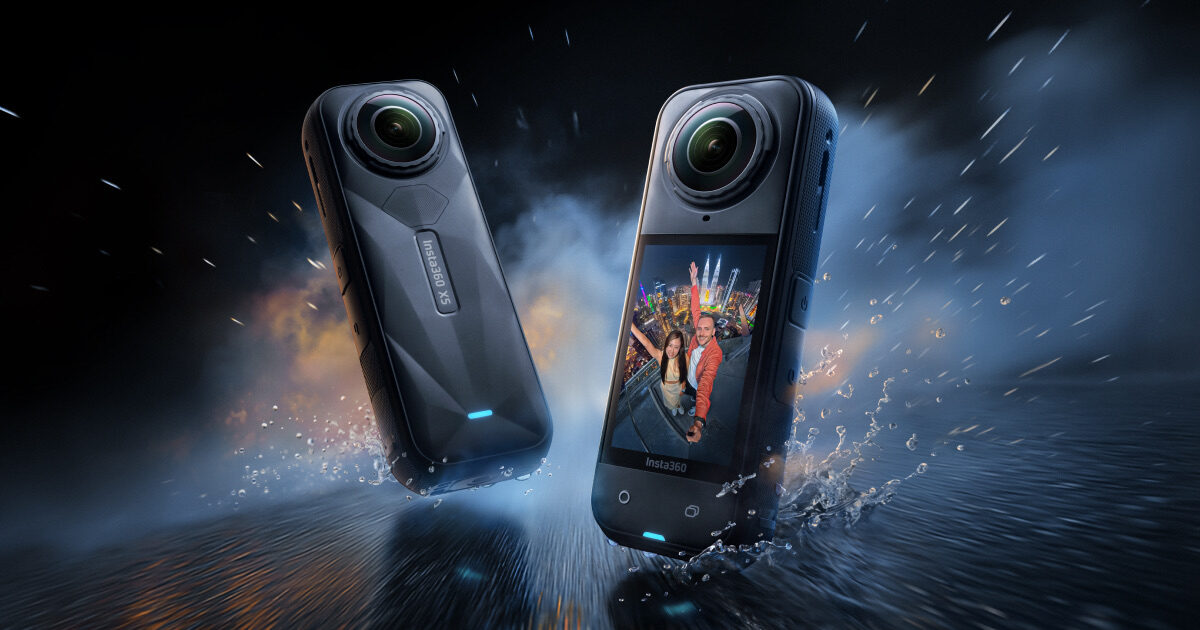
A lot has changed since our 2019 guide. Back then a one-shot 360 camera topped out around 23 megapixels, HDR was a coin flip, and anything serious meant hauling a DSLR on a panoramic head. In 2026 the mid-market has exploded. Consumer-priced cameras now shoot 72 to 120 MP stills with usable in-camera HDR, sensors have grown from 1/2.3" slivers to 1-inch-class chips, and DJI finally walked into the category and pushed everyone's prices down. The DSLR rig is still the quality ceiling, but the gap has never been this narrow. For most paid tour work, a $550 camera is now honestly enough.
How to choose a 360 camera for virtual tours
Spec sheets in this category are written for video shooters, so you have to read them sideways. The number that matters is still resolution, not video resolution. A virtual tour is a set of still panoramas, and "8K video" works out to roughly 33 MP per frame, pulled from a compressed stream. Look at the dedicated photo mode instead: 60 MP on the Theta X, 72 MP on the Insta360 X4 and X5, 96 MP on the QooCam 3 Ultra, 120 MP on the Osmo 360. More pixels means visitors can zoom into your panorama without hitting mush.
Sensor size beats megapixels, though. Interiors are dark and their windows are bright, and a bigger chip buys you cleaner shadows and truer color. The Theta Z1 stayed the tour shooter's favorite for years at only 23 MP because of its dual 1-inch sensors. The 1/1.1" and 1/1.28" chips in the Osmo 360 and X5 are the reason those two punch above their price.
Then there's HDR. Every interior is a high-contrast scene, so you want either a reliable in-camera HDR photo mode or, better, raw bracketing you can merge yourself. One catch I've been burned by: check that HDR actually works at the resolution you plan to shoot, because on some cameras it doesn't at maximum megapixels.
Two workflow details people underestimate until their first big job. The nadir, first. A one-shot camera on a slim stand hides its own support almost completely, leaving a tiny hole at the bottom of the sphere that you patch or cover with a logo in seconds. A DSLR on a tripod needs a separate nadir shot, and that editing time multiplies across every scene of every tour. Second, stitching. On-device stitching (Theta, Labpano) means files are ready the moment you get home. App-stitched or desktop-stitched cameras (Insta360, Kandao, DJI) add a step but usually stitch cleaner. On a 40-room hotel, that difference is your whole afternoon.
And ignore the influencer features. Invisible selfie stick, AI reframing, bullet time: none of it matters on a tripod. Don't pay extra for it, but don't hold it against a camera either.
Budget picks: under $500
Insta360 X4: best value in 2026
The Insta360 X4 was the company's flagship until April 2025, and since the X5 arrived its price has dropped to an all-time low of about $340. You still get 72 MP stills from dual 1/2" sensors, in-camera HDR, PureShot processing, and Insta360's mature mobile and desktop stitching apps. The sensors are smaller than the X5's, so shadows get noisy in dim rooms. Shoot HDR and keep the ISO down and it holds up fine. If you're still deciding if virtual tours are a business for you, start here and upgrade once the invoices say so.
Labpano PanoX V2: cheapest usable option
Labpano (the PilotPano people) sell the PanoX V2 at around $259-399 depending on retailer. It's an Android-based camera with a big 3" touchscreen and 72 MP sensors, up to 8K still output, and because it runs Android it stitches and uploads right on the device. No phone required. Build quality is consumer-grade and there's no weather resistance, but as a self-contained shoot-and-publish tool for Street View-style work it's remarkable money. Their older PilotPano (~$479, 5.7K, replaceable battery, built-in GPS) is still on sale for the same on-device workflow in a tougher package.
Prosumer picks: $500-1,500
This is where most working tour photographers should be shopping in 2026. Four cameras earn a place on the shortlist.
Insta360 X5: the default choice
At $549.99, the Insta360 X5 pairs dual 1/1.28" sensors (144% larger than the X4's) with 72 MP stills, 8K30 video, and IP68 waterproofing. Two things matter for tour work. Image quality first: the bigger sensors visibly clean up interior shadows, and HDR photo mode is now good enough that in most rooms I'd publish straight off the camera. And the lenses are user-replaceable. A scratched lens becomes a $30 part you swap at your desk instead of a repair ticket, which counts for a camera that rides in your bag to a job every day. The stitching software is the best in the business, too. If you want one answer to "what should I buy," this is it. One caveat on timing: the X6 cleared the FCC in July 2026 and is expected late summer or fall, so if you're not in a hurry, waiting a couple of months could mean a better camera or a cheaper X5.
DJI Osmo 360: highest resolution per dollar
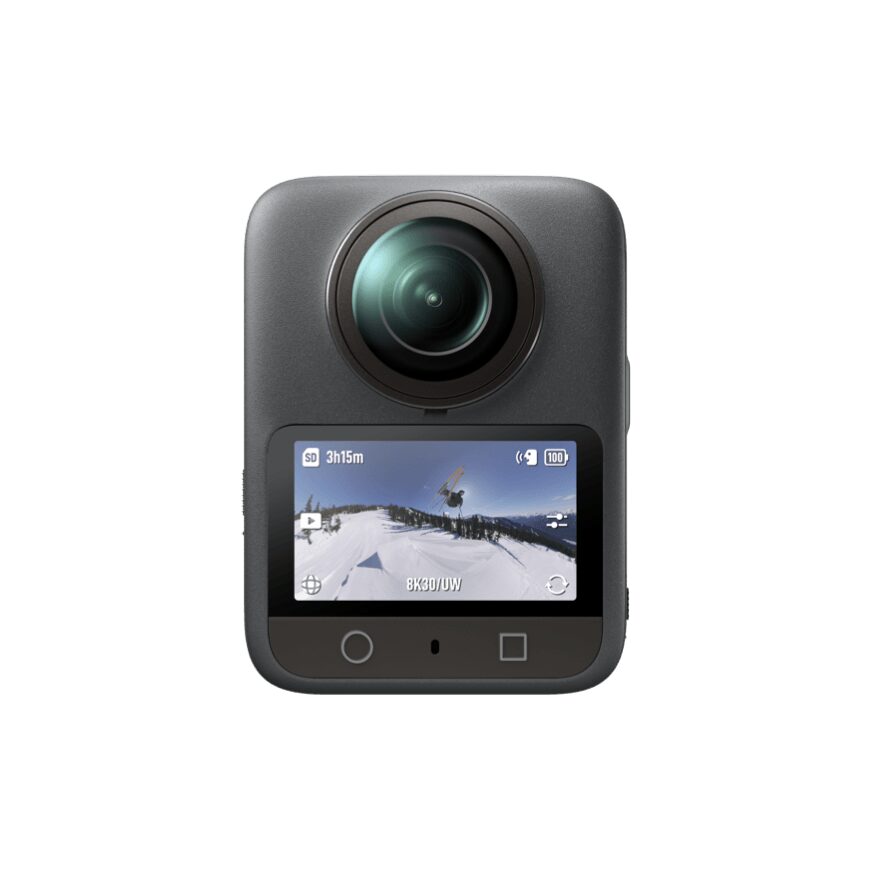
DJI's first 360 camera, the Osmo 360 (also $549.99 for the Standard Combo), is the X5's most serious rival. Its dual 1/1.1" square sensors give each lens a 1-inch-type imaging area, and it shoots 360° stills at up to 120 MP, the highest of any one-shot camera near this price, plus 8K50 video. If you're chasing maximum zoomable detail on a budget, the numbers favor DJI. Insta360 still wins on stitching software maturity and the tour-specific ecosystem around its cameras, so try both workflows before committing if you possibly can.
Kandao QooCam 3 Ultra: the bracketing workhorse
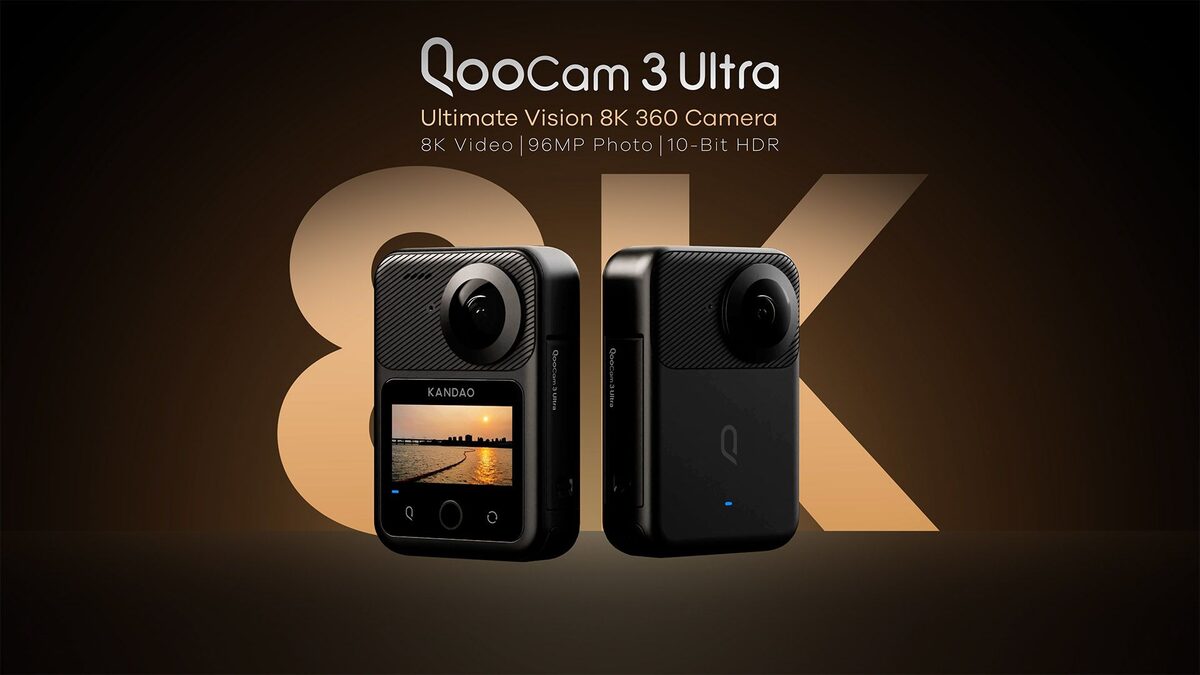
Kandao has courted virtual-tour shooters for years, and the QooCam 3 Ultra ($599) keeps that up: 96 MP panoramic stills from dual 1/1.7" sensors, fast f/1.6 lenses, 10-bit color, and proper HDR and raw workflows you merge on the desktop. The apps are less polished than Insta360's or DJI's and the accessory ecosystem is smaller. But the files take editing beautifully. If your process is "bracket everything, merge in post," it's arguably the most photographer-shaped camera of the three.
Ricoh Theta X and Theta Z1: the stand-and-deliver option
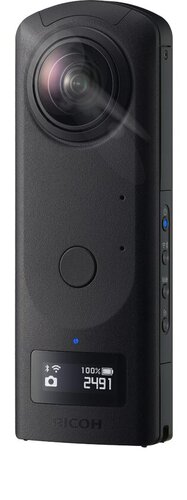
Ricoh's slim candy-bar Thetas remain the quiet professionals of the category. The Theta X (about $724-800) shoots 60 MP stills, stitches in-camera, and has a real touchscreen, a swappable battery, and a microSD slot. The Theta Z1 (roughly $1,000-1,275 depending on kit and region) is only 23 MP, but those pixels come from dual 1-inch sensors with an adjustable aperture and DNG raw output, and a bracketed, merged Z1 panorama still beats most 72 MP consumer files on color and dynamic range. I keep coming back to the Theta for reflective rooms; that skinny body is the least visible thing you can put in front of a mirror or a stainless fridge, and the one-button, pre-stitched workflow is the fastest way through a big property. Both models are several years old now with no successor announced, so buy them for what they are today.
Pro tier: over $1,500
Matterport Pro3: if your clients demand digital twins
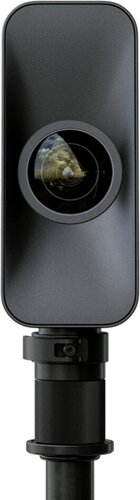
The Pro3 ($5,995 camera only, kits up to about $8,995) is a LiDAR scanner as much as a camera. It measures the space while photographing it, with scan range up to 100 m. When contracts require dimensionally accurate digital twins (construction documentation, insurance, facility management), it's the standard, full stop. Know what you're buying into, though. Matterport requires an active subscription to process and host your tours, and the output lives inside Matterport's ecosystem rather than in an open krpano-based tour you fully control. For marketing tours, a prosumer camera plus a good tour platform delivers more visual quality per dollar.
Insta360 Pro 2: multi-lens image quality
The Pro 2 ($4,999) is a six-lens sphere that shoots 8K 3D video and high-resolution stills with optical-flow stitching. It's aimed at VR film production, but tour studios use it where a one-shot camera's optics run out, in large venues and flagship commercial work. Its bigger sibling, the 11K eight-lens Titan, is still sold for cinematic VR budgets. Honestly, the case for a multi-lens rig on tour work is narrower than it was. A bracketed Z1 or a DSLR rig beats it on stills per dollar, and the Osmo 360 embarrasses it on convenience.
The quality ceiling: DSLR or mirrorless on a panoramic head
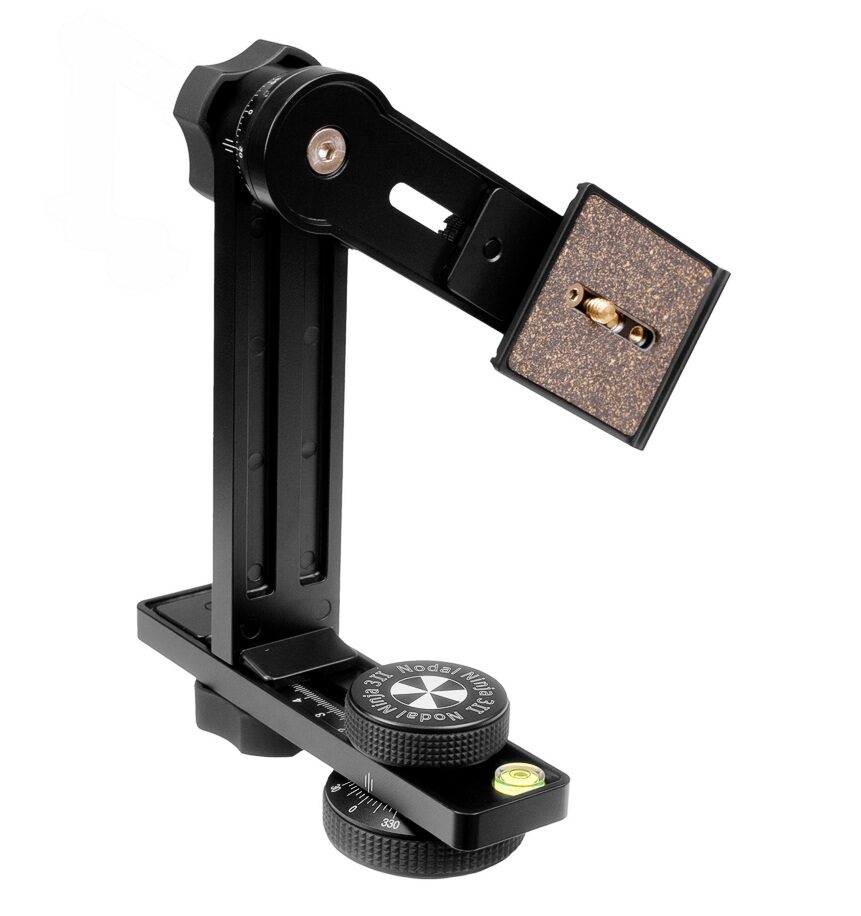
Still the reference standard, and still how we shoot the jobs where quality is the whole brief. A full-frame body, an 8 mm-class fisheye (the Sigma 8 mm f/3.5 and Canon 8-15 mm are the classics), and a calibrated head from Nodal Ninja (their fisheye-oriented R series, or the motorized MECHA units at under $300 for the head) will out-resolve and out-range everything above except the Matterport on geometry. Four fisheye shots plus zenith and nadir cover the sphere. Bracket each position and you're holding 14-bit raw HDR panoramas of 100+ MP that no one-shot camera can touch. The bill: roughly $1,500-3,000 depending on the body you already own, several minutes per scene instead of seconds, manual stitching in PTGui or similar, a separate nadir patch, and a real learning curve on no-parallax-point calibration. Shoot this way for museums, luxury listings, and print-crossover work. Shoot one-shot for everything with a deadline.
Comparison table
| Model | Approx. price (USD) | Max stills | Key strength | Best for |
|---|---|---|---|---|
| Labpano PanoX V2 | $259-399 | 72 MP / 8K | On-device Android stitching & upload | Street View, lowest budget |
| Insta360 X4 | $340 | 72 MP | Value; mature software | First paid tours |
| Insta360 X5 | $550 | 72 MP | 1/1.28" sensors, replaceable lenses | Default working camera |
| DJI Osmo 360 | $550 | 120 MP | 1-inch-class sensors, top resolution | Maximum detail per dollar |
| Kandao QooCam 3 Ultra | $599 | 96 MP | Raw/HDR bracketing, 10-bit | Edit-heavy workflows |
| Ricoh Theta X | $724 | 60 MP | In-camera stitch, fast workflow | High-volume real estate |
| Ricoh Theta Z1 | $1,000-1,275 | 23 MP (DNG) | Dual 1" sensors, raw quality | Color-critical interiors |
| Insta360 Pro 2 | $4,999 | 8K 3D | Six-lens optical-flow capture | VR film, flagship venues |
| Matterport Pro3 | $5,995+ | 4K imagery + LiDAR | Dimensionally accurate scans | Digital twins, AEC/insurance |
| DSLR + pano head | $1,500-3,000 | 100+ MP HDR | Unmatched stills quality | Museums, luxury, print |
Shooting workflow notes
Whatever you end up buying, technique moves the needle more than the camera does. These are the habits that separate tours that sell from tours that just exist:
- Bracket every interior. HDR photo mode is the floor, raw bracketing is the ceiling. Three to five frames, 2 EV apart, covers a room with daylight windows. Merge before stitching when your software allows it; merging stitched JPEGs throws away most of the benefit.
- Level the camera, every time. A tilted panorama makes viewers seasick and bends architectural lines. Start level and your verticals stay vertical. Shoot at eye height (about 1.5 m) for rooms that feel natural.
- Hide from your own camera. It sees everything, including you. Stand in a doorway or behind a column and trigger from the app, or use the self-timer and leave the room. Then check mirrors and windows for your reflection before moving on.
- Mind the nadir. A slim stand leaves a small patch to clone out or cover with a logo; a tripod leaves a big one. Decide your nadir policy before the shoot, not at the editing desk.
- Watch stitch distance. Keep important detail, like door frames and furniture edges, at least a meter from the lens seams. One-shot cameras stitch worst up close, so reposition rather than fix it in post.
- Lock exposure and white balance per scene so adjacent panoramas match. Auto-everything gives you a tour that flickers as visitors move room to room.
Bottom line
In 2026 the honest advice is simpler than it's ever been. Buy an Insta360 X5 or a DJI Osmo 360 and start shooting. Step up to a Theta Z1 or a DSLR rig when a client can actually tell the difference, and rent the pro hardware for the one job a year that needs it. The camera stopped being the bottleneck a while ago. Your shooting discipline and your tour platform are what visitors actually experience.
And whichever camera you pick, the panoramas need somewhere good to live. True Virtual Tours turns your 360° photos into fast, krpano-powered tours you can brand, embed, and share, and your first tour is free. Create your free virtual tour and see your new camera's files the way your clients will.
Related articles
-
 today
todayJohn Smith